



Solid Carbide vs Indexable Drills: Where Replaceable Tips Fit
The purchase price of a drill answers only part of the selection question. You also need to know what happens to the hole as the cutting edges wear, what you replace when they are worn, and whether the hole needs another machining operation.
That is the useful starting point for comparing a solid carbide drill, a replaceable-tip drill and an indexable insert drill. Their construction explains much of the cost difference. The drawing and a production trial decide whether those savings survive after inspection and finishing.
Understand which part cuts and which part gets replaced
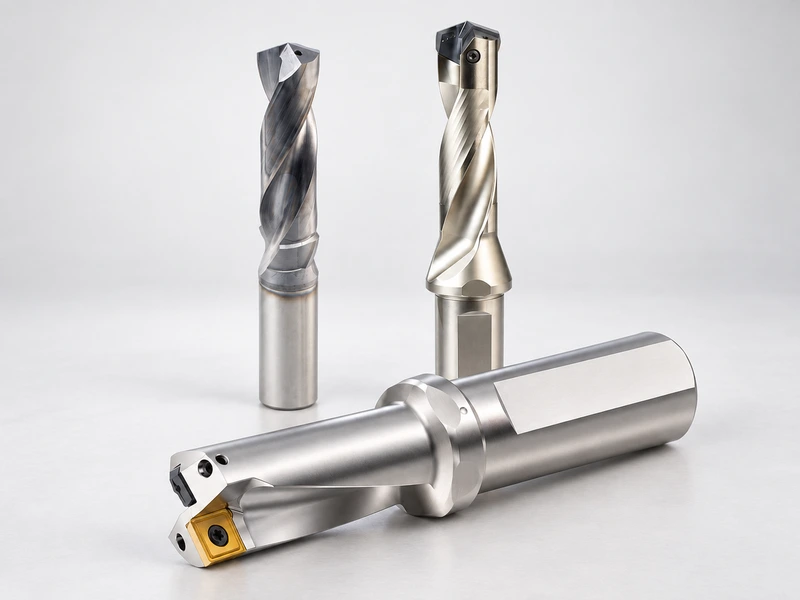
Start with the construction: which parts carry the cutting edges, and which parts remain in service after those edges wear? This explains the maintenance and cost differences more clearly than labeling one drill “precision” and another “economical.”
| Drill type | Construction | What changes after wear | What to verify |
|---|---|---|---|
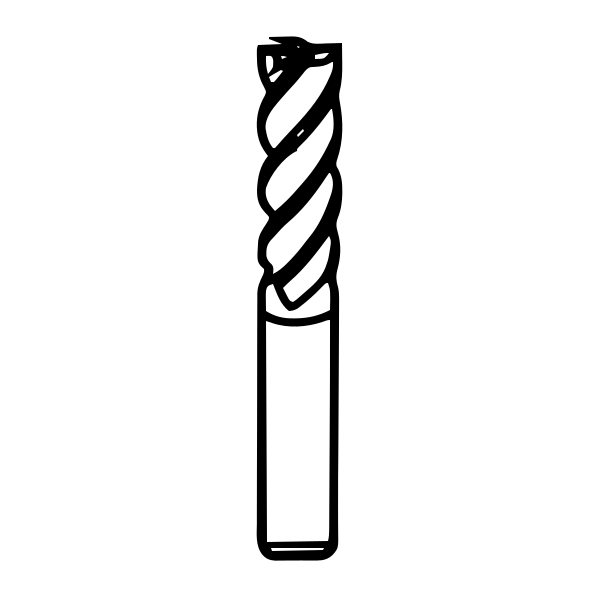
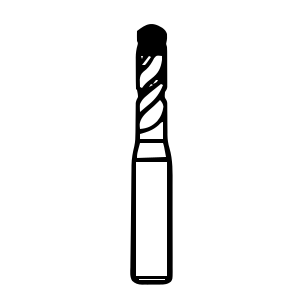
| Solid carbide | A carbide body carries the cutting geometry, flutes and supporting features. | The tool may be reconditioned where suitable, or replaced. | Hole quality through the usable life and, if applicable, after reconditioning. |
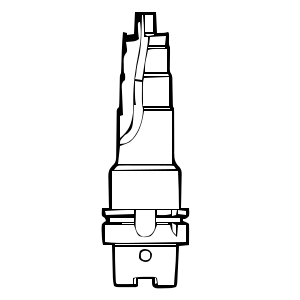
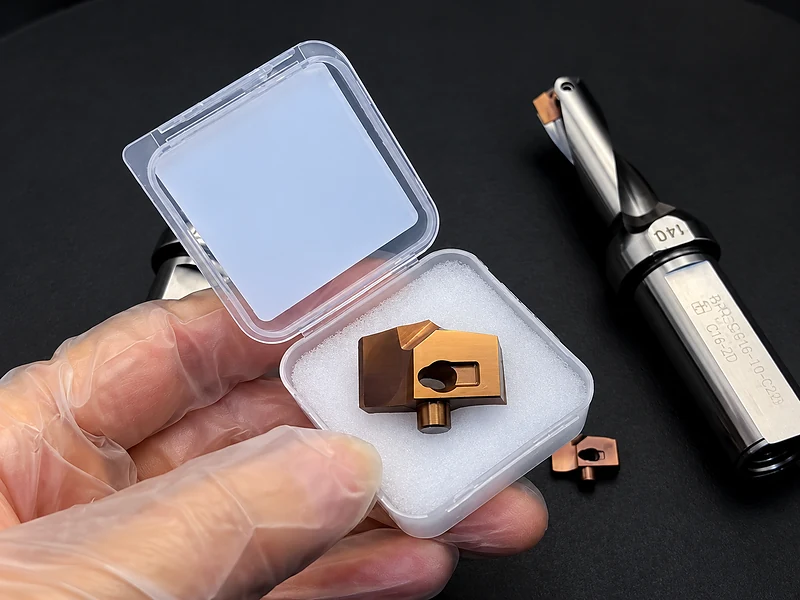
| Replaceable tip | A reusable body carries a replaceable carbide cutting head. | The head is changed; the body remains in use if serviceable. | Head seating, tool condition and hole consistency after a head change. |
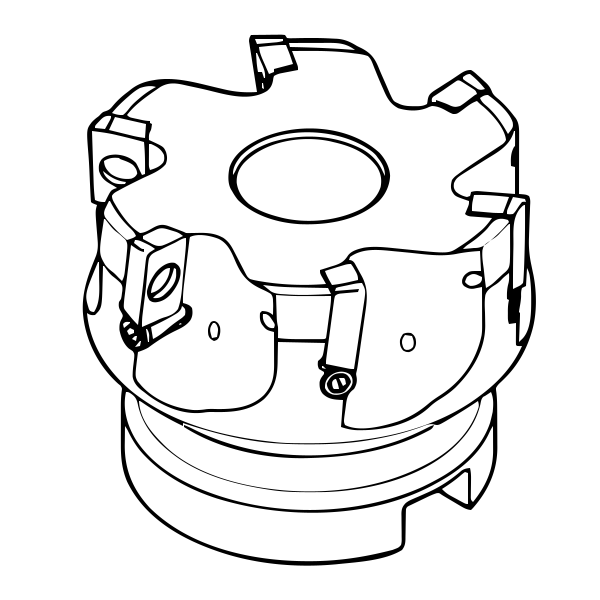
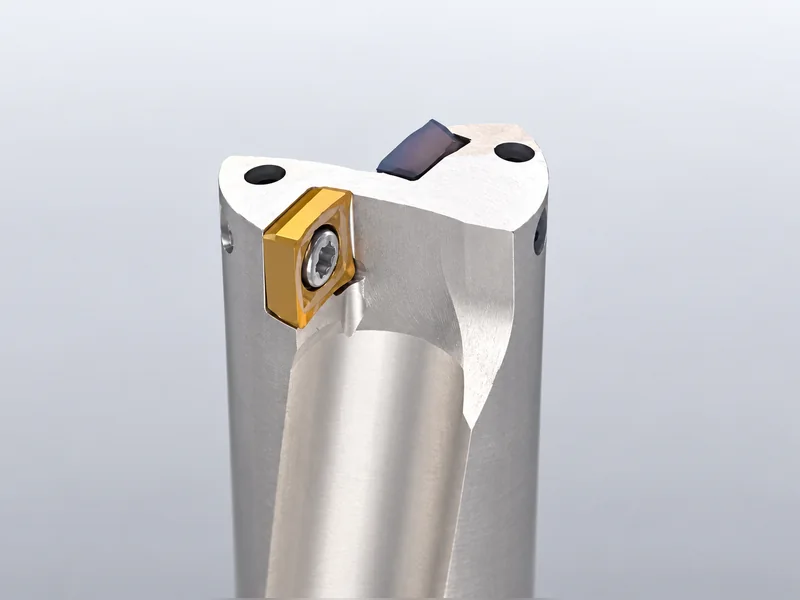
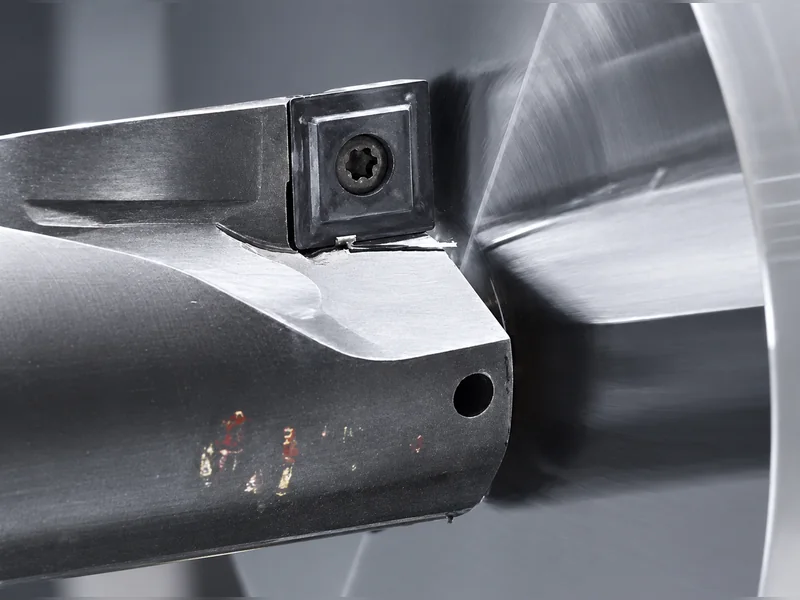
| Indexable insert | A reusable body carries separate cutting inserts. A common U-drill layout has center and peripheral inserts. | Suitable insert edges are indexed or the inserts replaced. | Insert selection and seating, cutting performance, and the hole's remaining finishing allowance. |
A replaceable head is not interchangeable with any head that happens to look similar. Check the body's approved diameter range and the specific head connection. Likewise, center and peripheral inserts must be installed in the positions specified for the drill.
Why diameter changes the cost discussion
A larger solid carbide drill uses more carbide in the body. A steel body with a carbide head or cutting inserts reduces the amount of carbide that must be renewed after wear. Much of the supporting structure remains in service while the worn cutting component is changed.
Solid carbide also gives the tool designer scope to grind application-specific geometry into the body, including step features and different flute arrangements. For a particular hole, that geometry may justify the cost. For another job, renewing only the cutting head or inserts may be more economical.
Tool ranges overlap, so diameter alone does not set the crossover between constructions. Compare the available systems at the required hole depth, in the actual material and machine, against the same quality requirement.
Compare actual candidates in the required size. Do not reject one on the basis of a shop rule that was developed around a different tool range.
Centering matters, but “has a point” is not the whole explanation
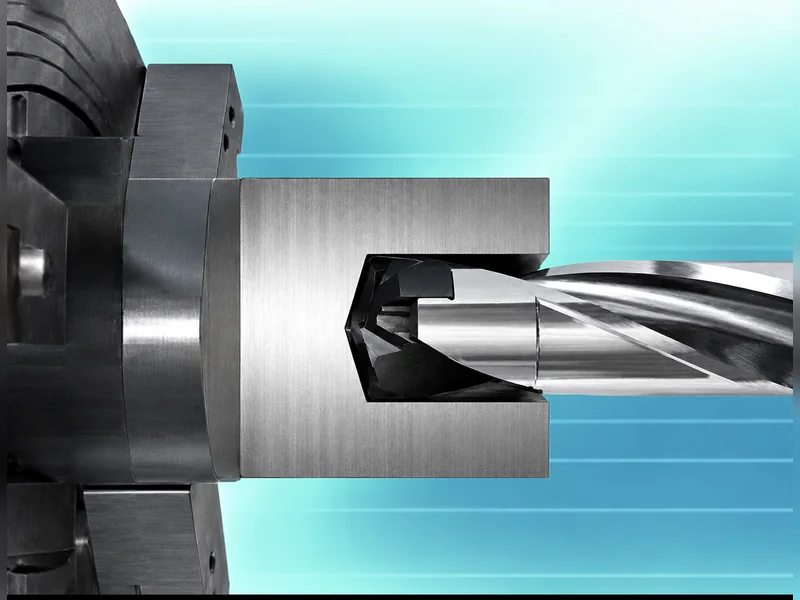
Entry stability affects the path the drill establishes. Compare how each candidate engages the entry surface, not just how quickly it removes material once fully engaged. A fast drilling cycle does not compensate for a hole that starts off position.
However, an indexable drill does not simply leave its center uncut because it lacks the familiar point of a twist drill. Its center insert cuts the central region, while the peripheral insert cuts the outer region. Insert geometry and the tool's design have to be assessed as a system.
For the actual job, examine the entry surface, alignment, runout, tool reach and specified application limits. A sloped entry or an interrupted feature may require a particular tool design or process. Changing to solid carbide alone is not proof that an alignment or setup problem has been solved.
Where entry geometry needs closer investigation, our drill point-angle guide provides related background. Use it with the selected tool's instructions rather than as a substitute for them.
A good first-hole finish is not a production capability
In one aluminum-drilling observation, a sharp drill produced a finish around Ra 1.6 µm early in use, but the finish deteriorated as the edge wore. This is an example of changing performance over tool life, not a guaranteed finish: the alloy, drill dimensions and measurement conditions would need to be established before using that value for another job.
What it does show is why a single successful hole can mislead a tool comparison. If the drawing requires that finish throughout production, the useful question is how long the process stays within the requirement and how you identify the end of that interval.
Apply the same test to all three constructions. Do not assume that every replaceable-tip or indexable drill produces only a rough hole. Nor should a solid carbide drill be assumed to finish every precision bore without another operation. Check the actual tool's stated capability and measure the result on the actual workpiece.
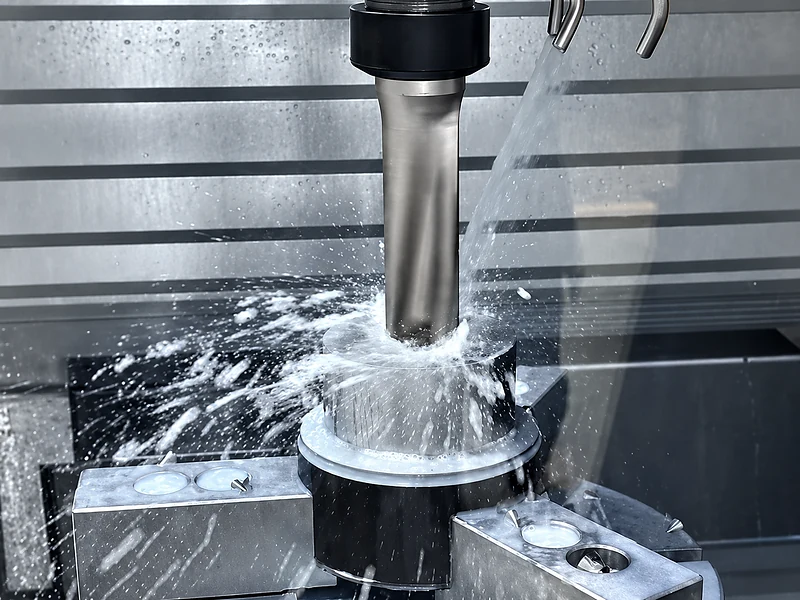
Decide whether drilling is the final operation
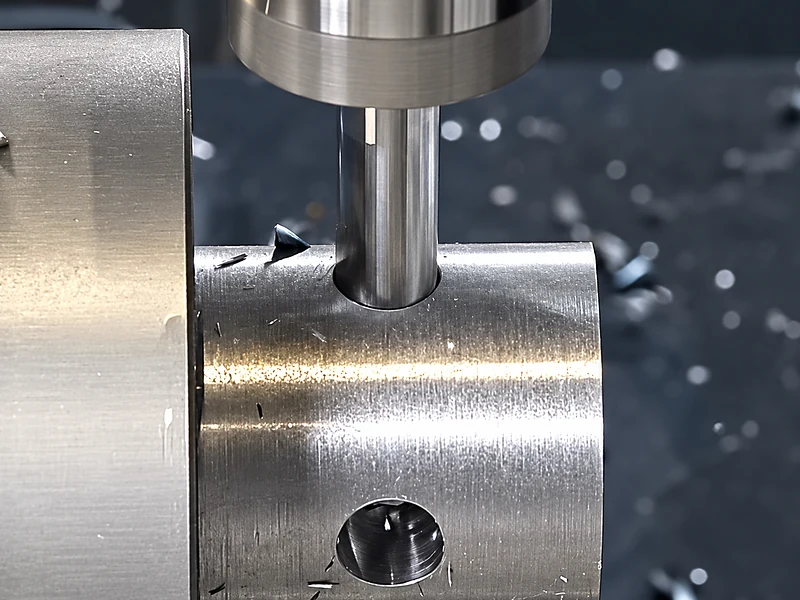
If the drilled hole is the finished hole
Evaluate all relevant drawing requirements after drilling: diameter, surface finish, position and form as specified. Sample through the trial, not only at the start. For replaceable tooling, include holes made after a head or insert change.
A lower-cost cutting component offers little benefit if the process needs frequent sorting or produces rejects late in the run. Choose the tool and replacement interval around the accepted hole.
If boring or reaming follows
The drill's job includes providing an appropriate and consistent starting hole for the next operation. A rougher drilled finish may be acceptable, but hole variation still matters if it changes the stock left for finishing.
Compare the full route: drilling time, tool consumption, the condition of the incoming bore, finishing time and rejects. A cheaper drilled hole can become an expensive finished hole if it makes the next operation unstable. Our explanation of drilling versus reaming covers that distinction.
Run a comparison that survives the first tool change
Give each candidate a documented starting condition: the same workpiece specification and hole requirement, with suitable cutting data for that particular tool. Record the machine, holder, coolant delivery and tool reach. Equal spindle speed is not automatically a fair comparison between different designs.
Measure holes when the cutting edge is new, during use, near the proposed replacement point and after renewal. Include reconditioning where it is a genuine option for the solid carbide tool. Include body condition and head or insert seating for the reusable systems.
A practical comparison is:
Cost per accepted hole = allocated tooling, machining, changeover, inspection and rework costs ÷ accepted holes.
Use the same cost boundary for every candidate. The result may favor different drills on different parts. What matters is that the chosen construction produces the required hole consistently and that its apparent saving remains after the rest of the process is counted.
Explore our solid carbide drills and indexable insert drills for the constructions discussed here. If the hole requires finishing, review the carbide reamer family alongside the complete process requirements.