










What Size Drill for 1/4-20 Tap?
Selecting the correct drill bit matters when cutting a thread. For a 1/4-20 UNC cutting tap, #7 is a common chart reference, but the permitted hole depends on the tap and thread specification. An oversized hole can leave insufficient thread height; an undersized hole can increase torque. Forming taps require different pre-holes.
For holes that stop before breaking through the part, also review our guide to blind hole tapping and depth control.
Contents
Understanding Tap and Drill Relationships
First, you need to understand how a tap creates threads. A 1/4-20 tap is designed to make a hole that fits a bolt with a 1/4-inch outer diameter and 20 threads per inch.
Basic Tap Terminology
The “1/4” is the major diameter, which is the widest part of the bolt. The 20 tells you the thread pitch. To make room for the tool to cut into the metal, you cannot drill a full 1/4-inch hole. If you did, there would be no metal left for the tap to shape into teeth.
Thread Engagement and Hole Size
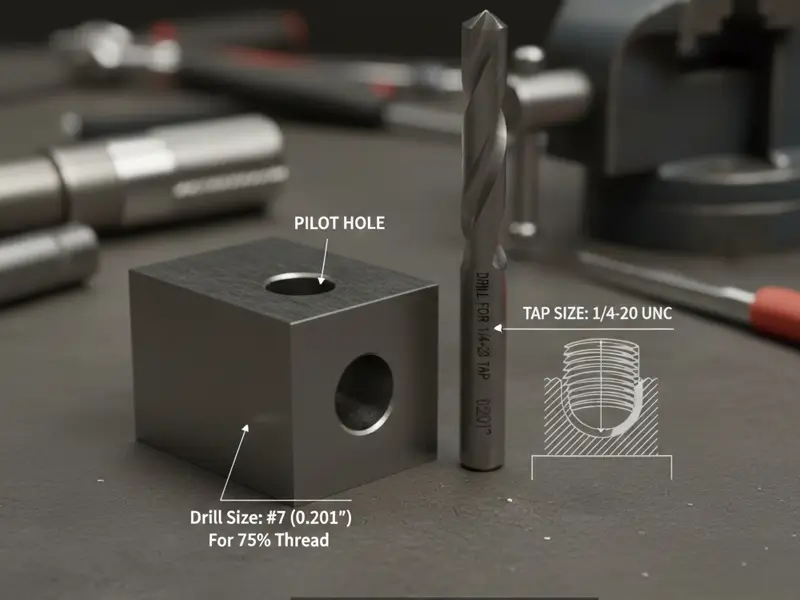
For cutting taps, the drill hole is smaller than the 1/4-inch major diameter so that material remains for the thread profile. Charts often show 75% theoretical thread height as a reference. This is not the axial engagement length or a universal maximum-strength requirement.
Recommended Drill Bit Sizes for 1/4-20 Tap
The following sizes illustrate common drill choices. Select by the tap maker’s data and required thread limits, not simply by which drill is available.
Standard Drill Bit: #7 Drill Bit
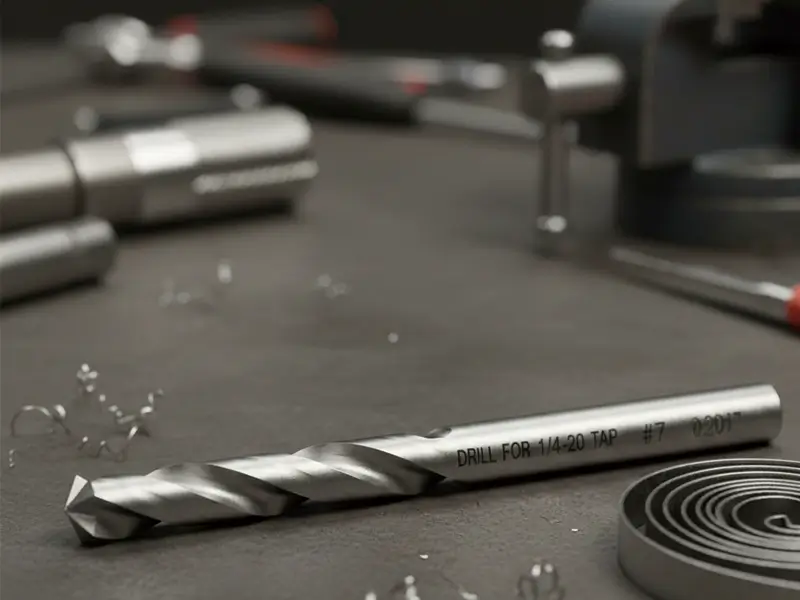
The #7 drill has a diameter of 0.201 inches. It is a common reference for a 1/4-20 UNC cutting tap at approximately 75% theoretical thread height. Confirm suitability for the actual tap, material, and thread tolerance.
Alternative Drill Sizes
Alternative drills change the pre-hole diameter and thread height. Use them only when the resulting hole is within the approved process and thread limits.
13/64″ Fractional Drill Bit
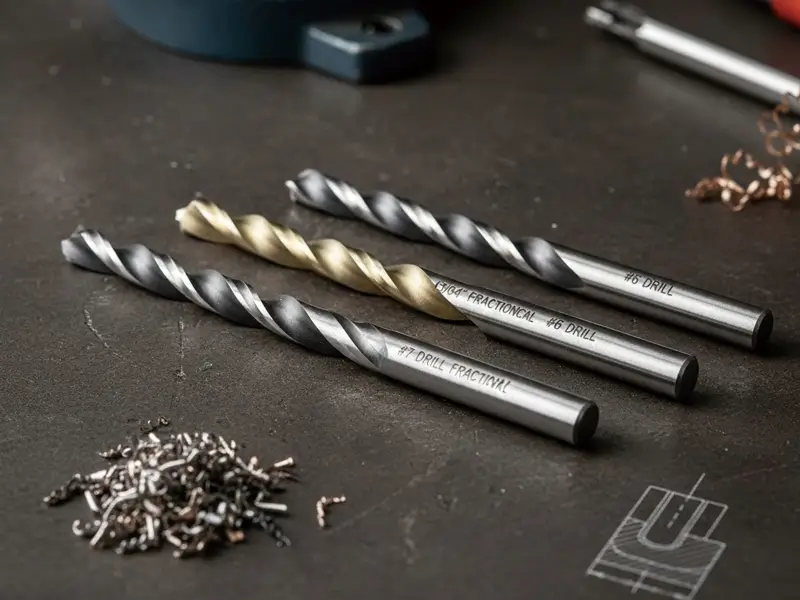
A 13/64-inch drill measures approximately 0.2031 inches. It is slightly larger than #7 and leaves less thread height. It is not an automatic substitute; verify the permitted pre-hole range.
#6 Drill Bit
A #6 drill measures 0.204 inches. Written to another decimal place, this is 0.2040 inches, which is larger than the #7 diameter of 0.2010 inches. Check the permitted range before substitution.
Comparison of Options
A larger pre-hole can reduce cutting torque but also reduces thread height. Joint strength depends on material, thread dimensions, engagement length, and loading. For critical parts, follow the drawing and validated process rather than selecting a drill by feel.
Material and Application Considerations
The type of hole and the hardness of the metal will change your strategy.
Through Holes vs. Blind Holes
A through hole exits the workpiece; a blind hole ends within it. For blind holes, select a suitable tap and provide depth for the full thread, tap chamfer, chips, and drill point. Enlarging the bore is not a general solution to chip evacuation.
Material Hardness Effects
Harder materials can demand different tap grades, geometry, and cutting conditions. A larger pre-hole may reduce cutting torque, but any change must satisfy the thread specification and tap maker’s guidance. Soft material does not automatically justify a smaller hole.
Drilling and Tapping Best Practices
The best way to do this is to ensure your hole is perfectly straight and clear of debris before you start. Precision at the beginning prevents expensive mistakes later.
Marking and Positioning the Hole
Locate and clamp the workpiece accurately. For suitable manual work, use a center punch; for machine drilling, follow the drill maker’s entry recommendations. Use a pilot or guide hole only when appropriate to the drill design and operation.
Lubrication and Cooling
Choose cutting fluid or another lubrication strategy recommended for the tap, drill, and work material. Suitable lubrication can reduce friction and support chip removal. A 1/4-20 UNC thread is coarse, not fine; its pitch alone does not determine the lubrication method.
Drilling Technique Tips
Align the drill and tap with the specified hole axis. Follow the tap maker’s feed and reversal instructions. A fixed forward-and-back routine can suit some manual cutting taps but must not be applied to every machine or forming tap.
Testing on Scrap Material
A trial in representative scrap can help validate an unfamiliar process. Measure the pre-hole and inspect the thread using suitable gauges. A bolt that feels snug is not sufficient evidence of dimensional conformity or joint strength.
Troubleshooting Common Issues
Investigate the actual hole size, tap condition, alignment, material, cutting data, lubrication, and chip evacuation when problems occur.
Tap Binding or Breakage
Unexpectedly high torque can indicate an undersized hole, chip packing, misalignment, wear, or unsuitable cutting conditions. Stop and follow the equipment and tool maker’s recovery procedure. Do not force the tap or assume that sound alone predicts failure.
Loose or Weak Threads
Loose threads can result from an oversized pre-hole, incorrect tap size, runout, or other process errors. Check the hole and finished thread dimensions. Reaming is a controlled hole-finishing operation, not merely allowing a drill to spin without feeding.
Tapered Threads
A 1/4-20 UNC thread is parallel, not a tapered thread. Misalignment can cause binding or an inaccurate thread, but it does not create a correctly specified taper. Use suitable guidance and maintain the specified axis.
Quick Reference Table
The table compares cutting-tap pre-hole examples for 1/4-20 UNC. The #7 entry is a common chart reference; the other sizes are comparisons, not material-based prescriptions. Verify the permitted range for the actual tap. Forming-tap values differ.
Application | Recommended Drill Size | Decimal Diameter |
Common cutting-tap reference (approximately 75% thread height) | #7 Drill Bit | 0.201″ |
Larger pre-hole example — verify limits | 13/64″ | 0.2031″ |
Smaller pre-hole example — verify limits | #8 Drill Bit | 0.199″ |
Conclusion
For a 1/4-20 UNC cutting tap, #7 is a common starting reference. Select the final pre-hole size from the thread specification and tap maker’s data. Alternatives require validation, and forming taps need separate sizing. Check alignment, lubrication, depth, and finished-thread dimensions.
FAQs
What size drill bit do I use for a 1/4-20 tap?
A #7 drill is a common reference for a 1/4-20 UNC cutting tap. Confirm the tap maker’s recommendation and required tolerances; do not use this as a forming-tap specification.
Can I use a different drill size besides #7?
A 13/64-inch drill is slightly larger than #7. It may be usable only when the resulting pre-hole and thread remain within the specified limits. Check the tap data before substituting.
Why shouldn’t I just drill a 1/4″ hole?
A 1/4″ hole is the same size as the bolt. If you drill it that large, the tap will have no metal to cut into, and the screw will just fall through the hole.
How does material hardness affect drill size choice?
Material affects tap selection and cutting conditions. Do not enlarge the pre-hole based on hardness alone; use the tap maker’s recommendations and comply with the thread limits.
Should I use cutting fluid when drilling for a 1/4-20 tap?
Use the lubrication and cooling method recommended for the material and tooling. Suitable fluid can reduce friction and adhesion, but the correct method depends on the application.